
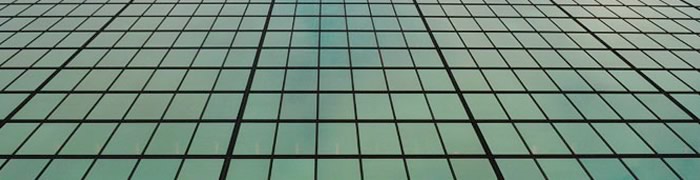
A3,A5 - Plasma simulationIon Wind from a sDBDThe ion wind from an sDBD has been calculated by |
DFG
SFB 1316 bewilligt
Nichtgleichgewichtsprozesse sind die Grundlage einer Vielzahl von Phänomenen in der Natur, wie z.B. Transport, Anregung von Atomen und Molekülen sowie Entanregung und Dissipation an Oberflächen. Der Nicht-Gleichgewichtscharakter von Plasmen ist aufgrund der hohen Energiedichte in diesen Systemen und der sehr selektiven Anregung z. B. nur der Elektronen besonders ausgeprägt. Bringt man diese Plasmen in Kontakt mit Festkörpern oder Flüssigkeiten, kann der Nichtgleichgewichtscharakter auf andere Aggregatzustände übertragen werden. Ein hervorragendes Beispiel sind plasmachemische Prozesse, die direkt an katalytisch aktive Oberflächen gekoppelt sind.
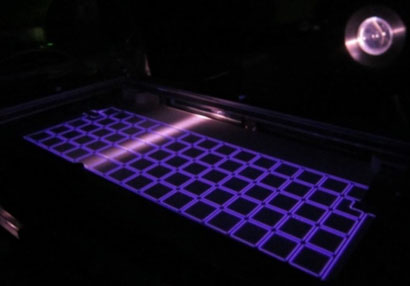 Der Einsatz von Nicht-Gleichgewichts-Atmosphärendruck-Plasmen ist besonders interessant, da sie sich am einfachsten mit chemischen Standardprozessen kombinieren lassen. Der Nicht-Gleichgewichtscharakter dieser Plasmen kann durch große Gasströme oder durch kurze gepulste Anregung, die starke Kühlmechanismen gewährleistet, kontrolliert werden. Dadurch kann eine große Vielfalt an gewünschten Plasmachemien oder Emissionsmustern nach einer empirischen Strategie eingestellt werden. Einem weiteren Fortschritt steht jedoch das fehlende grundlegende Verständnis dieser Entladungen und ihrer Wechselwirkung mit flüssigen und festen Grenzflächen entgegen.
Der Sonderforschungsbereich (SFB) 1316 "Transiente atmosphärische Plasmen - von Plasmen über Flüssigkeiten zu Festkörpern" adressiert diese Forschungsfragen durch die Kombination von Expertise in Plasmaphysik, Oberflächenphysik, Chemie, Biotechnologie und Ingenieurwissenschaften. Dieser SFB konzentriert sich auf transiente atmosphärische Plasmen auf unterschiedlichen räumlichen und zeitlichen Skalen für die Nanostrukturierung und Aktivierung von katalytischen Oberflächen, für die Kopplung zur Katalyse und Biokatalyse sowie für elektrochemische Prozesse. Aufgrund der starken Wechselwirkung zwischen diesen Plasmen und den begrenzenden Grenzflächen werden spezielle in-situ-, Echtzeit- und in-operando-Methoden zum Einsatz kommen. Das Forschungsprogramm folgt drei aufeinander aufbauenden Phasen vom Erreichen eines grundlegenden Verständnisses zu Beginn über die optimale Integration von Plasma und aktiver Oberfläche bis hin zum Upscaling dieser Plasmen. Der SFB 1316 sucht nach optimalen Lösungen für Systeme zur Energieumwandlung (solare Brennstoffe, CO2-Harvesting, Photokatalyse), für den Gesundheitsbereich (Entfernung flüchtiger organischer Verbindungen aus Luftströmen), für die Biotechnologie (plasmagestützte Biokatalyse) und für die technische Chemie (Bottom-up-Synthese von kleinen Molekülen zu wertvollen Chemikalien).
MGK
Integrated Research Training Group
The research of the CRC 1316 is based on doctoral researchers that are educated to reach a solid expertise in the very interdisciplinary field of transient atmospheric non-equilibrium plasmas and their interfaces to solids and liquids. The support of early career researchers (ECR) is targeted at the individual academic levels ranging from master students, doctoral researchers, to independent PostDocs. The ultimate goal is to generate/qualify independent responsible researchers that are embedded in an international network. This goal is realized by the establishment of an integrated research training group (MGK) consisting of lectures, training workshop, and hands-on exercises for the ECRs.
The MGK is the central platform to build up the interdisciplinary expertise among the doctoral researchers at the interfaces between plasma physics – surface science – (surface) chemistry – biology. Doctoral researchers with a background in plasma physics are asked to attend a targeted training in solid-state physics, biology, and chemistry, and vice versa. Accordingly, doctoral researchers from other research fields join the corresponding lectures. All courses will also be open to local students as well as taught in English in order to include international students. Furthermore, these courses will serve as a local advertisement for the CRC 1316 and as a networking platform for master students and new doctoral researchers. First contact between the CRC 1316 and promising PhD candidates is made, who can be motivated to apply for a position within the CRC. These courses are also highly attractive for incoming students who are offered the whole range of welcome and orientation services by the international office of the Ruhr-Universit ¨ at Bochum prior to and upon arrival – in particular accommodation, legal advice, intercultural awareness, and access to language courses. The lectures are given by the PI or invited experts. It is also combined with some hands on exercises, which are either demonstration experiments on diagnostics, or lecture hall programming courses on available simulation tools.
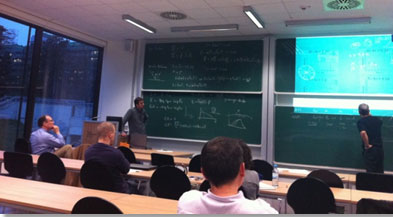
The MGK builds on the expertise from coordinating the European graduate school MC-ITN RAPID on reactive atmospheric pressure plasma science (2013-2017) as well as on the integrated training school of the SFB-TR 87 (2010- ). The training program of the CRC 1316 is complementary to that of the SFB-TR 87 dealing with low pressure plasmas, because the focus in the CRC 1316 is on atmospheric pressure plasmas and on (plasma) chemistry. The basic courses on the fundamentals on plasma diagnostics, the fundamentals of modelling, or fundamental knowledge in chemistry will be joint events of all research consortia at RUB. By continuous and long-standing development at RUB in supporting early career researchers formats like international workshops, monitoring of the ECR progress by career development plans (CDP), and annual progress reports (APR), as well as mentoring for the ECRs by PIs in academia and industry are well established procedures at RUB.
The offers of the MGK are complemented by the RUB Research School on campus at RUB and by the Research Academy Ruhr as an umbrella of the offers of the univeristy in the Ruhr area.
Contact Public Outreach
Science Manager Plasma Science Hub
Dr. Marina Prenzel
Gebäude NB 5/126
Ruhr-Universität Bochum
Tel.: +49 (0) 234 32-23688
Fax: +49 (0) 234 32-14171
E-Mail: