


A3,A7 - Plasma ChemistryGas Conversion in an sDBDSurface Dielectric barrier discharges are perfect |
Geistesblitz Bochum
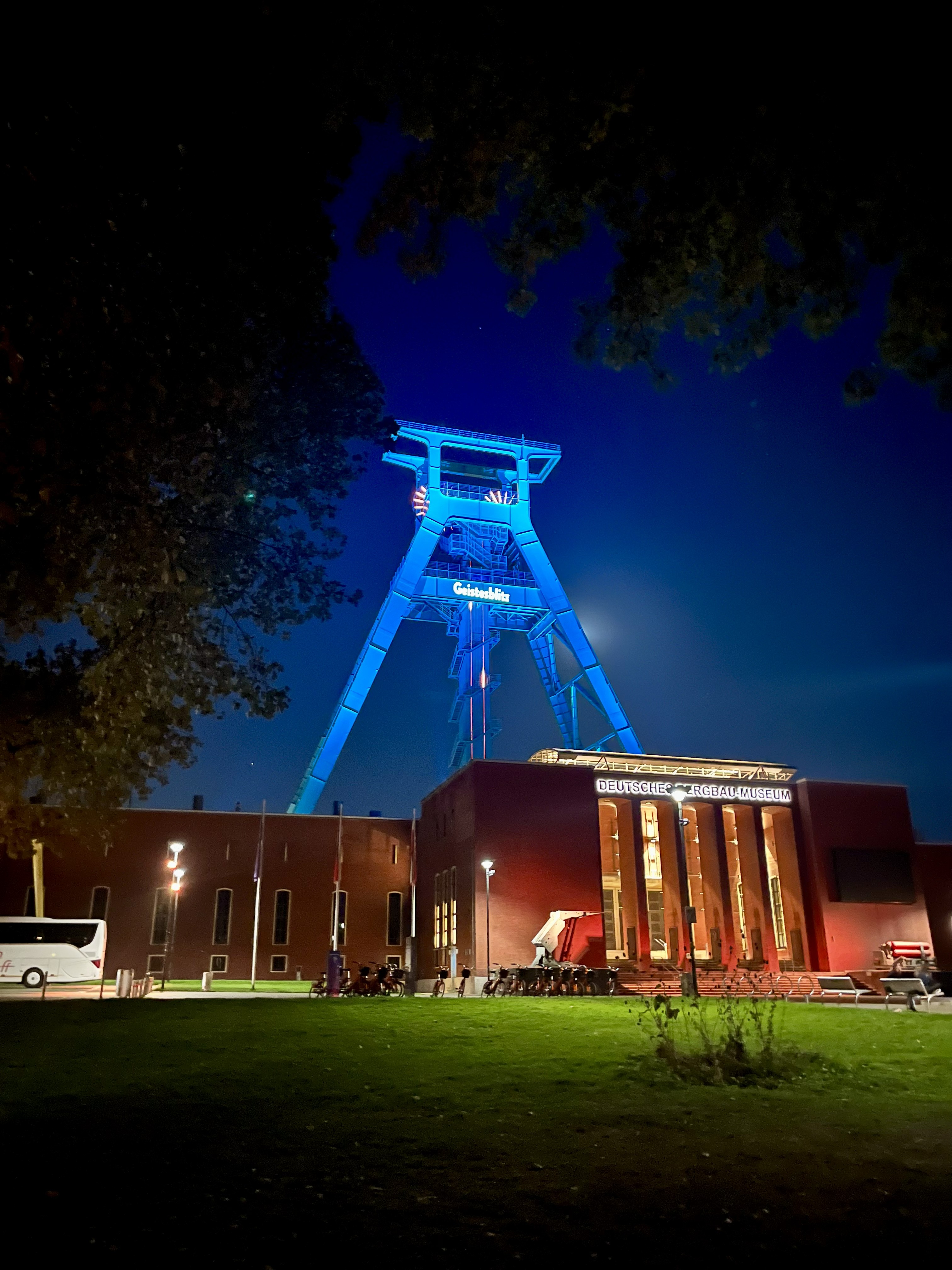 On Friday 25th September, the ‘Geistesblitz’ knowledge festival took place in Bochum city centre. In collaboration with numerous partners from the worlds of science, local government and culture, the UniverCity Bochum knowledge network organised a diverse programme to make science accessible to everyone.
At the Georg Agricola University of Applied Sciences visitors were able to explore the themed area ‘STEM for the Future’. The CRC 1316 was also present, offering insights into the physics of glowing gases. Alongside many hands-on experiments and fascinating facts from current plasma research at Ruhr University Bochum, the youngest visitors had the opportunity to coat small ducks with gold to take home as souvenirs.
Ibrahim Sadiek honoured with the Peter Werle Award
We are happy to congratulate Ibrahim Sadiek for receiving the 2026 Peter Werle Award!
The award recognizes outstanding early-career scientists whose work reflects innovation, scientific curiosity, precision, and a willingness to challenge established ideas.
Ibrahim is honored for his outstanding contributions to molecular spectroscopy, combining high-resolution laser spectroscopy, advanced spectral analysis, and modelling to explore complex and reactive molecular systems.
Excursion to Greifswald 2026
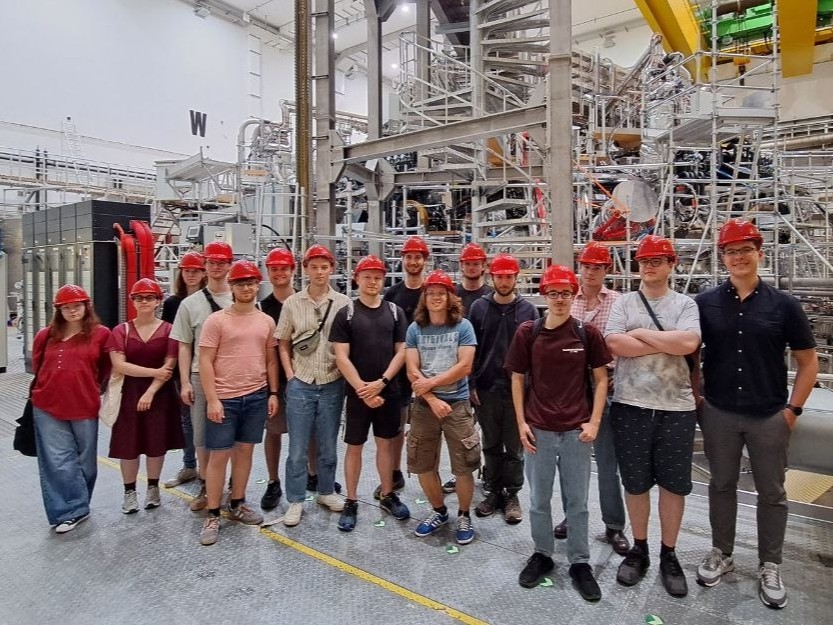 From August 12 to August 14, this year’s excursion took place in Greifswald at the Leibniz Institute for Plasma Science and Technology (INP) and the Max Planck Institute for Plasma Physics. During lab tours at the INP, the participating students were able to see firsthand how research in plasma physics is conducted: both practically through experiments and theoretically through modeling. Another major topic was the management of scientific data to ensure its long-term storage and reuse. In direct contrast to many smaller experiments conducted by individual researchers in their own labs, the IPP focuses on research within a large-scale project involving hundreds of scientists working simultaneously: research on the world’s largest fusion reactor of its kind, the Wendelstein 7-X. During the tour of the reactor hall and the control room, as well as through lectures, participants were able to experience the scale that research in plasma physics can reach. In addition to all the educational events, there was plenty of opportunity for networking among students with varying levels of experience: more spontaneous activities, such as watching the solar eclipse and the Perseid meteor shower together on the Baltic Sea beach, provided many opportunities for relaxed socializing.
PSE 2026
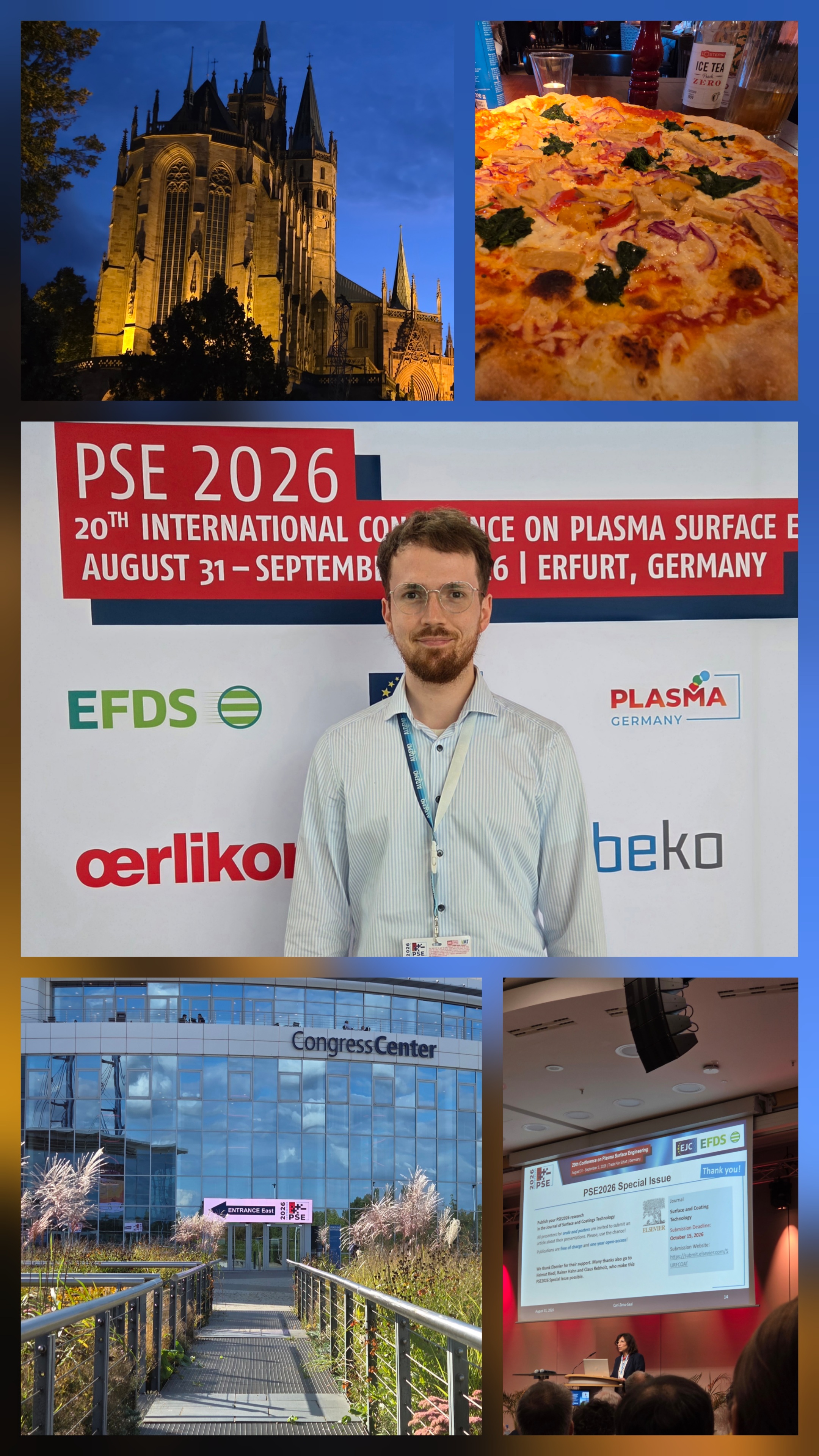 The 20th International Conference on Plasma Surface Engineering (PSE) took place in Erfurt from August 31 to September 3.
Elia Jüngling represented the CRC 1316, presenting recent research and exchanged ideas with leading scientists from around the world. He contributed to the scientific program with an oral presentation about 'Plasma Sheath Tailoring for Advanced 3D Plasma Etching: The Effects of Redeposition and Plasma Asymmetry'.