


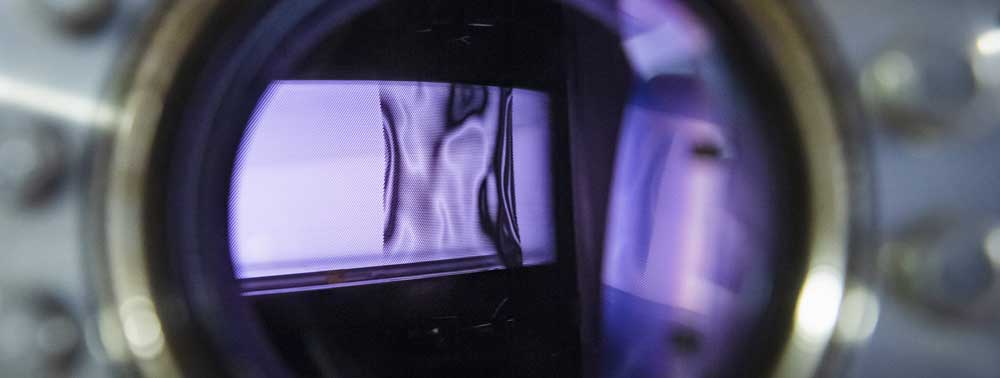
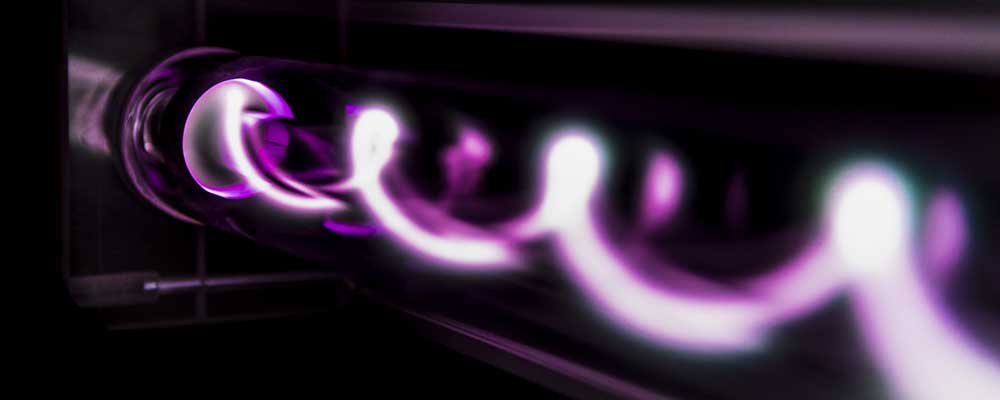
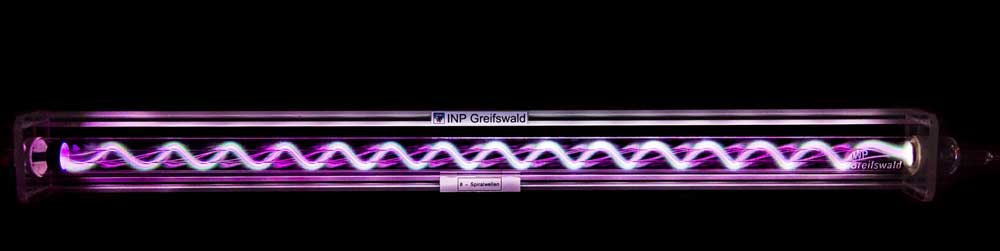
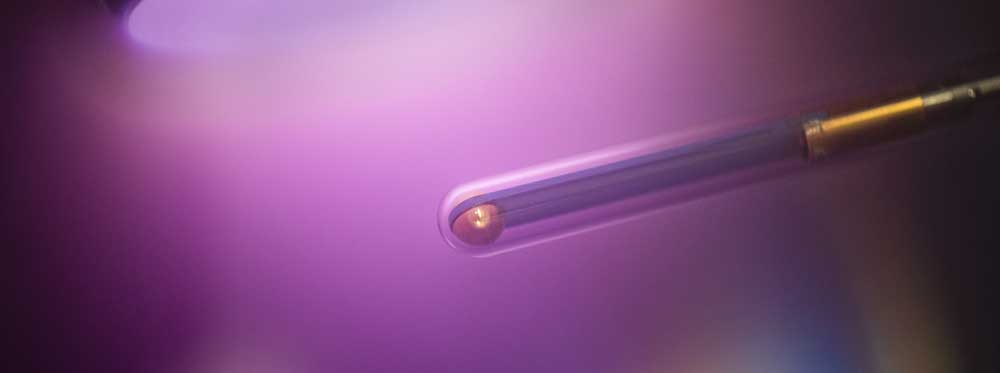
A5 - sDBDSurface Streamer PropagationTime-resolved electron impact excitation rates showing |
- Details
Internationalization
Successful Plasma Summer School in 2020 in an online format
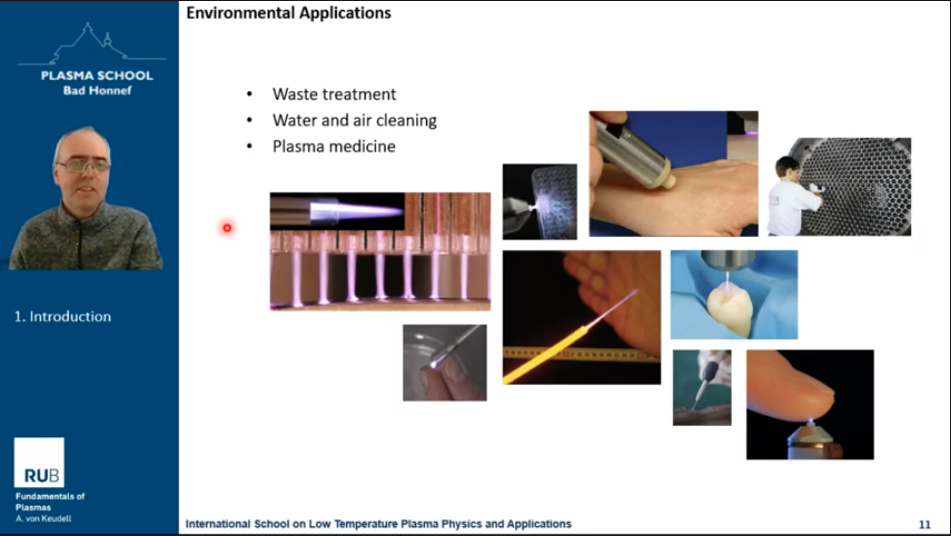 Due to the current situation, this year's summer school did not take place at the usual location of the physics center in Bad Honnef, but online. The regular programme consisting of basic plasma physics lectures combined with a master class on special topics could not take place as usual. Nevertheless, all teachers have agreed to deliver their basic lectures via an online video format. The summer school was extended to two weeks with two lectures per day. This year more people were able to tune in, because the online format is much easier to reach from regions with limited travel possibilities.
The lectures were technically flawless and the feedback from students and teachers was very positive. Many discussions and interactions could be made possible due to the high commitment of all teachers. Two practical workshops were also held by L. L. Alves on solving the Boltzmann equation and by N. Braithwaite on analyzing the Paschen curve.
We hope for another summer school in 2021, then again in the facilities of the physics center in Bad Honnef. The latest information on the planning for 2021 will be published at the summer school homepage in March 2021.
- Details
MGK activity
Great colloquium planned for April 2021
As MGK activity of the CRC 1316 for all PhD students as well as PostDocs of the collaborative research center, a colloquium taking place in a conference center is organized. The program is planned for two days in a conference center. The colloquium is in the frame of an informal format, so that intense discussion and questions can arise.
Associated PhD students or PostDocs from the SFB-TR 87 as well as collaborating institutes are welcome.
The colloquium is planned for 21/04/21 until 22/04/21 2021 in Maria in der Aue in Wermelskirchen.
Further information and the registration are realized via a separate page: MGK colloquium.
The organization is done by two Phd students from the CRC 1316, Jan Kuhfeld and Patrick Preissing. For questions, both can be contacted directly or via sfb1316(at)rub.de.
- Details
Successful collaboration with INP Greifswald
Research data management as central aspect within the collaborative research centres
Research data is a central output of science. They expand the scientific knowledge and are the basis for future research projects. The documentation of research data should follow subject-specific standards. The long-term archiving of research data is important for the quality assurance of any scientific work, but is also a fundamental prerequisite to allow the reusability of research results.
Researcher from the INP Greifswald enrolled a BMBF funded project with the title Quality assurance and networking of research data in plasma technology - QPTDat. This project aims to develop and test processes and methods for a quality assured and interdisciplinary reuse of research data from plasma technology.
QPTDat cooperation
A collaboration between INP and the CRC 1316 started in 2018 and now the Research Department Plasmas with Complex Interactions, and also the SFB-TR 87 join the activities on research data management. A workshop organized by INP Greifswald in January 2020 was the starting point for further active implementations in the field of research data management in the plasma community in the CRCs as well as in the Research Department.
First measures at EP2
As a first measure, an initiative at the research group EP2 at RUB results in an improved data storage on the local server of the institute. The storage volume has a regular backup and granting access to the complete group or to individual persons is possible. Beside measurement data, all further analysis steps are documented including meta data from all process steps. The members of the research group used a file name scheme, so that files can be found easily by other researchers.
Research data repository
Finally, published research data can be stored and published for the open public on the repository at
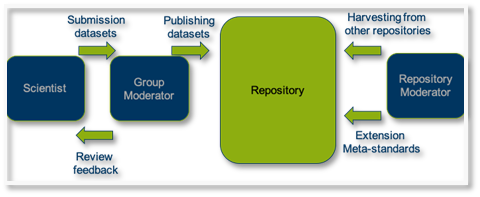
The idea of such a repository is the full documentation of measurement conditions (measurement data in a readable file format including meta data). First research groups from the CRCs have access to this repository and upload research data of published papers.
The concept of the repository is based on a multi-level system for publishing records. Users can put data online for review, which are then published by group moderators. The standards for publishing records must be defined by the group. In addition, meta data standards are currently being developed within the CRCs and together with INP Greifswald, so that data entry will be clearer and more uniform in future.
NFDI4Phys
Recently, the Research Department Plasmas with Complex Interactions has started to join the collaboration of different scientific institutions within the so-called NFDI4Phys consortium. It aims to create structures and tools to simplify and unify the exchange of (mainly) numerical factual data in all areas of physics, with related disciplines and with the industry. The consortium is applying to the DFG for funding within the National Research Data Infrastructure (NFDI) project.
Within the framework of the NFDI4Phys consortium, the CRCs developing meta data standards for research questions in plasma science. Further goals are to contribute to the definition of basic and interdisciplinary standards and to develop methods to make research data from different sources generally accessible and interpretable.
- In case, you need further information regarding this topic, please contact
This email address is being protected from spambots. You need JavaScript enabled to view it. via mail.
- Details
Japanese core-to-core program
Two PhD students profit from research stay at Hamaguchi Lab, Center for Atomic and Molecular Technologies, Osaka University, Osaka
From October to December 2019, I was able to join the lab of Prof. Satoshi Hamaguchi at the Center for Atomic and Molecular Technologies in Osaka, Japan.
My field of research is applied microbiology and my focus is on biocatalytic reactions with non-thermal plasmas.
Using numerical simulations, I studied the propagation of plasma-induced reactive species in liquids to gain an insight on the depth of penetration and concentration of these species. This knowledge will help to understand the interaction between plasmas and enzymes that are studied in project B8 of the CRC 1316, specifically to protect the enzymes from inactivation and to drive biocatalysis.
The research stay in Japan was very helpful to deepen my knowledge for my main research question.
Abdulkadir Yayci, project B8 of the CRC 1316
I have visited Hamaguchi Laboratories at Osaka University in Japan for 3 months. The lab exchange was funded partially by the CRC-1316 and the JSPS core-to-core program. The group of Prof. Satoshi Hamaguchi developed a reaction-diffusion-convection simulation for the generation and transport of chemical species in water, introduced by atmospheric-pressure plasma. During my stay, I worked on a multiphase fluid model. The typical flow field of a turbulent atmospheric-pressure plasma jet in direct vicinity of a liquid was modelled by solving a k-epsilon turbulence model. A Volume-of-Fluid (VOF) method was applied for the coupled flow of gaseous and liquid phase. The simulations agree very well with experimental results in the literature. The results from the fluid flow simulations were integrated into the reaction-diffusion-convection equations to evaluate the influence of different flow regimes on the generation and transport of chemical species in the liquid.
At Bochum University, I am working as a PhD student within project B5 of the CRC 1316: 2D-plasma-liquid-solid interfaces – plasma electrolytic oxidation. The generated results can be useful for this project in regards of chemical species generation inside of liquids. In addition, the fluid flow model is interesting for other groups working with atmospheric-pressure plasmas (e.g. project B2: Self-organization of sub-µm surface structures stimulated by microplasma generated reactive species and short-pulsed laser irradiation).
Summarizing I can say, that I had a very pleasant stay in Osaka, that I personally enjoyed a lot. The cooperation with the Hamaguchi Laboratories were very fruitful and everyone was very kind during my stay.
Patrick Hermanns, project B5 of the CRC 1316
- Details
Eickhoff prize
Dr.-Ing. Schmidt is awarded for his outstanding dissertation
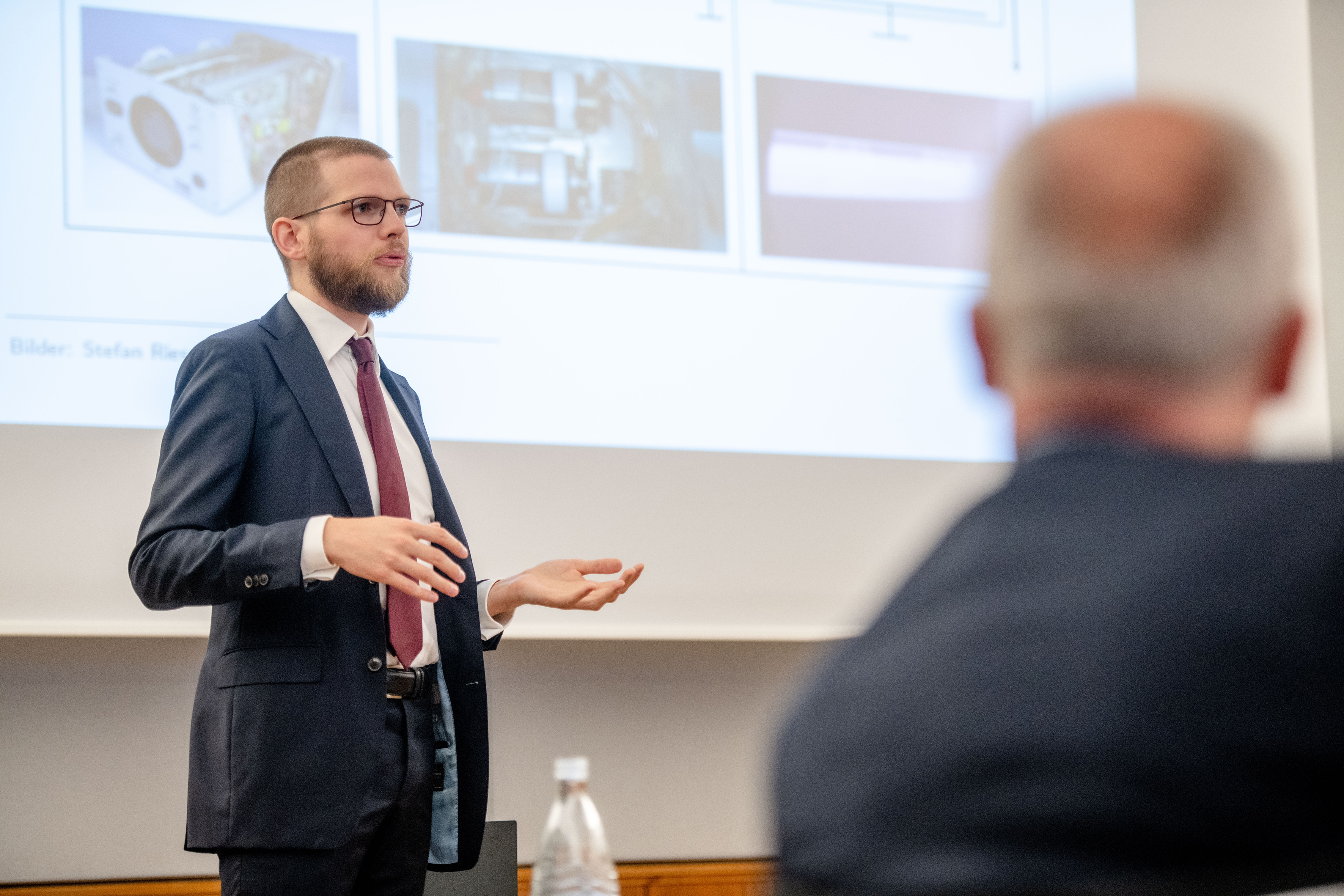
Technical plasmas are among the things that have a significant influence on the world around us, without many people knowing about it. "You can, for example, process surfaces with plasmas; but they are crucial in the production of modern computer chips, which are built into almost all modern technical devices - from cars to smart phones," explains Frederik Schmidt. "A better understanding of this technology leads to innovations that make our lives easier, network people and shape our future.
In his dissertation, he investigated how the energy gets into a plasma. The path from the power socket to nanometer-sized semiconductor tracks is being investigated by various specialists and is in part well understood. Frederik Schmidt has brought together two of these specialist areas: the electrical network between the power socket and the plasma on the one hand, and detailed plasma simulations on the other. This makes it possible to investigate the relationship between the two. "For example, I have looked at the paths along which energy flows and how much is lost on its way into the plasma. That is sometimes quite a lot," says the researcher. The results help to make systems and superstructures more efficient and thus more economical and ecological. In addition, he has developed his own electrical network that can be implemented for certain applications with considerably less effort and losses than before. "I was able to show theoretically that this works. Colleagues in France were then able to prove in experiments that it is also practically possible to build something like this," says Schmidt.
adapted from Meike Drießen, RUB
- Details
Research Paper
Unraveling ns plasma physics of streamers in water
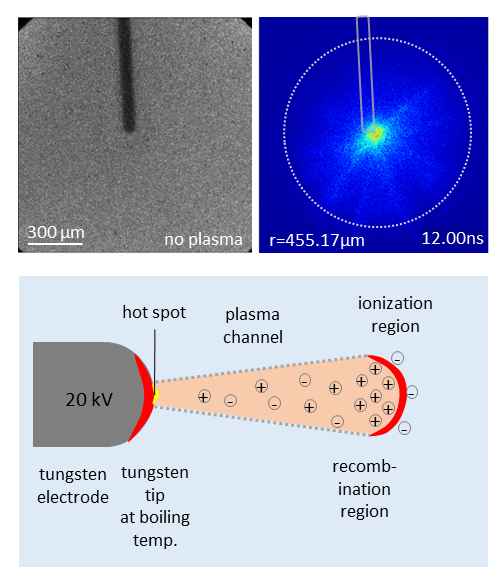
The spectra are dominated by the black body continuum from the hot tungsten surface and line emissions from the hydrogen Balmer series. Typical temperatures from 6000K up to 8000K are reached for the tungsten surface corresponding to the boiling temperature of tungsten at varying tungsten vapor pressures. The analysis of the ignition process and the concurrent spectral features indicate that the plasma is initiated by field ionization of water molecules at the electrode surface. At the end of the pulse, field emission of electrons can occur. During the plasma pulse, it is postulated that the plasma contracts locally at the electrode surface forming a hot spot. This causes a characteristic contribution to the continuum emission at small wavelengths. The spectra also show pronounced emission lines of the hydrogen Balmer series.
Nanosecond plasmas in liquids are an important method to trigger the water chemistry for electrolysis or for biomedical applications in plasma medicine. The understanding of these chemical processes relies on knowing the variation of the temperatures in these dynamic plasmas. This is analyzed by monitoring nanosecond pulsed plasmas that are generated by high voltages (HV) at 20 kV and pulse lengths of 15 ns applied to a tungsten tip with 50 micrometer diameter immersed in water. Plasma emission is analyzed by optical emission spectroscopy (OES) ranging from UV wavelengths of 250nm to visible wavelengths of 850nm at a high temporal resolution of 2 ns.
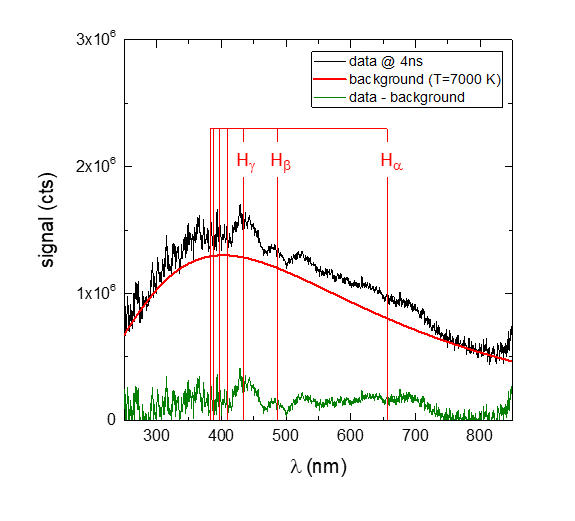 The data indicate two contributions of the hydrogen line radiation that differ with respect to the degree of self-absorption. It is postulated that one contribution originates from a recombination region showing strong self absorption and one contribution from a ionization region showing very little self-absorption. The emission lines from the ionization region are evaluated assuming Stark broadening, that yielded electron densities up to 5 x 10^25 m^-3. The electron density evolution follows the same trend as the temporal evolution of the voltage applied to the tungsten tip. The propagation mechanism of the plasma is similar to that of a positive streamer in the gas phase, although in the liquid phase field effects such as electron transport by tunneling should play an important role.
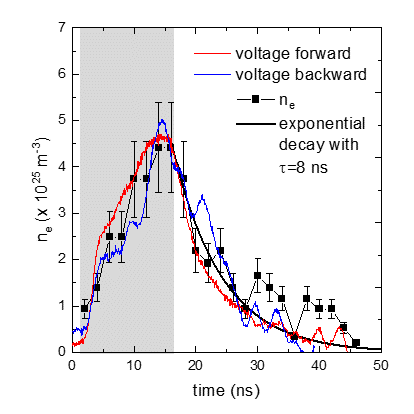
It is striking that the electron density follows closely the voltage applied to the electrode during the rising and falling edge of the pulse. In nanosecond plasmas in gases at atmospheric pressures, the voltage and current exhibit usually a delay in between with the voltage rising first followed by the current due to the delayed build-up of the electron density in the ionization avalanche. During the plasma propagation in the liquid, however, the density of species is three orders of magnitudes higher, so that the build-up of charges is expected to be much faster compared to the variation of the voltage. The same also holds for recombination that should exhibit time constants of the order of ps at these densities. The actual electron density is then a balance between generation of free electrons in the high electric fields and their loss due to recombination. This is consistent with the observation that the electron density follows also the decrease of the voltage with a time constant of 8 ns. The decay of the electron density is not a free decay due to recombination, but rather follows a decreasing equilibrium value as a competition between ionization and recombination.
- publication in PSST: Nanosecond pulsed discharges in distilled water - Part I: Continuum radiation and plasma ignition K. Grosse, V. Schulz-von der Gathen, A. von Keudell
- publication in PSST: Nanosecond pulsed discharges in distilled water - Part II: Line emission and plasma propagation A. von Keudell, K. Grossse, V. Schulz-von der Gathen
- Details
Successful cooperation of projects B1 & B7 of the CRC 1316
Setting up µs-pulsed plasma source in liquids at FHI, Berlin
In the framework of the cooperation between the projects B1 and B7 of the CRC 1316, the whole setup for µs-pulsed plasmas in liquids was transferred from Bochum to the FHI in Berlin. Afterwards, from February 17th until February 21st, 2020, PhD student Katharina Grosse from project B7 visited the group of Prof. Roldan Cuenya in Berlin to set up the experiment with the local PhD student Philipp Grosse from project B1. The cooperation between these projects should unravel the question, whether and how catalytic surfaces used for electrochemistry can be recovered by discharge treatment inside the electrolyte. With the move of the experiment from Bochum to Berlin and preliminary measurements, the first step is completed to investigate the influence of the plasma generated in-liquid species on the catalysts.
Katharina Grosse, project B7 of the CRC 1316
- Details
Public research activities
"Mobile plasma workshop" for high school students finished
The last working step for the recent project of public relations is completed. The plasma truck, namely the mobile workshop for students, addresses physics courses within the last two years of school time.
The didactic concept of the workshop is the deepening of existing knowledge by connecting the pre-known physics with concepts from plasma physics. The concept was developed together with the research group physics didactics of Prof. Krabbe at the faculty of physics and astronomy at Ruhr-University Bochum. Within the framework of a Master thesis, Jasmin Schmidt analysed the existing knowledge of the students concerning plasmas. She found that a lot of experiments and descriptions of phenomena were treated during the classes, but have not been connected to plasmas.
Here, the workshop picks up the known experiments and categorises them in a new way. Finally, interested school classes in and around Bochum can book the workshop for a time period of 90 minutes. On the day of the workshop, public relations staff as well as assistant students will visit the school class. A short movie has been produced to introduce the audience to the topic. Finally, the students have the chance to work on the experiments by themselves in small groups. A booklet with information on the experiments leads through the workshop. First groups might try out the workshop after the summer holidays in case that Covid-19 measures are allowing it.
Maike Kai & Marina Prenzel, public relations CRCs
- Details
SFB 1316 Summer Meeting
Summer Meeting will be held online
This year's SFB 1316 summer meeting will be held as an online meeting via Zoom on June 30th and July 1st. Among other things, the meeting will focus on the preparation of the second funding phase. The researchers will present their progress in the projects and ideas and for the continuation of the project.
The final agenda has now been set up. If any further changes will be made, the updated agenda will be published here.
- The time schedule and planned presentations for the summer meeting can be found in the agenda.