
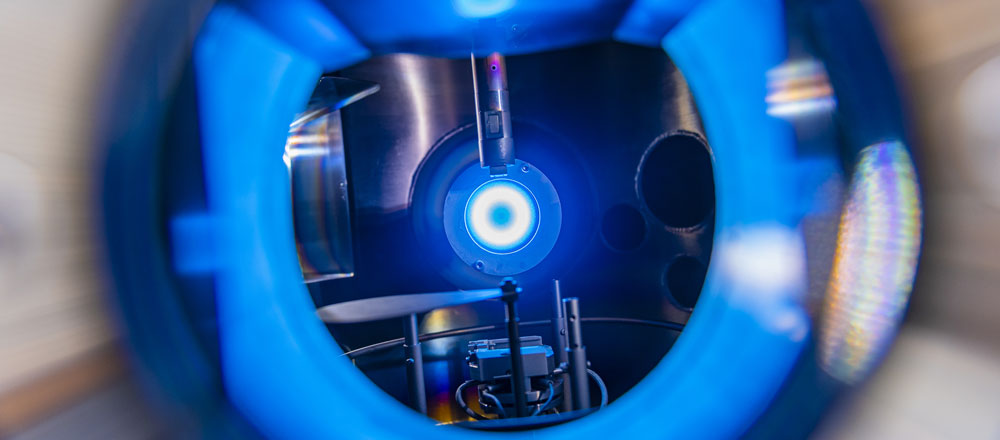
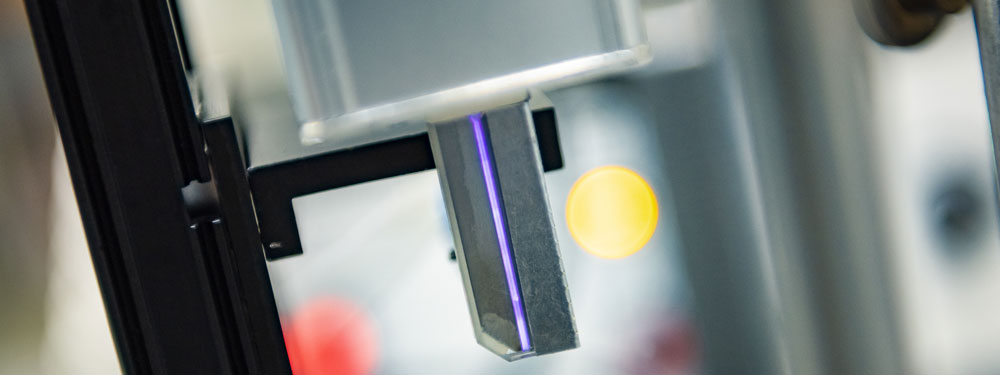
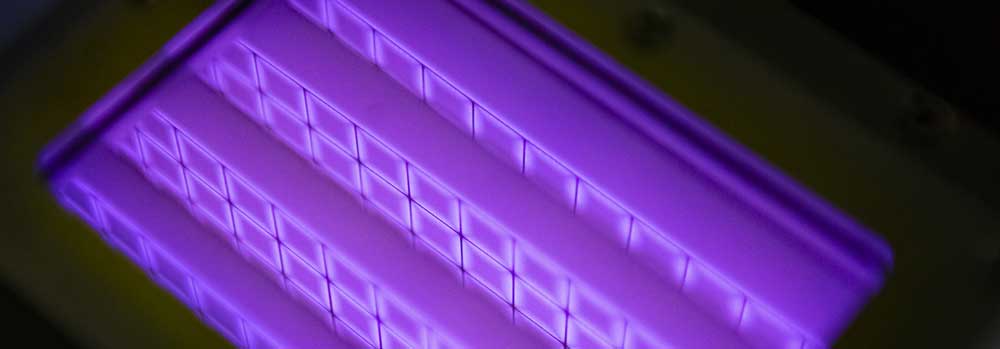
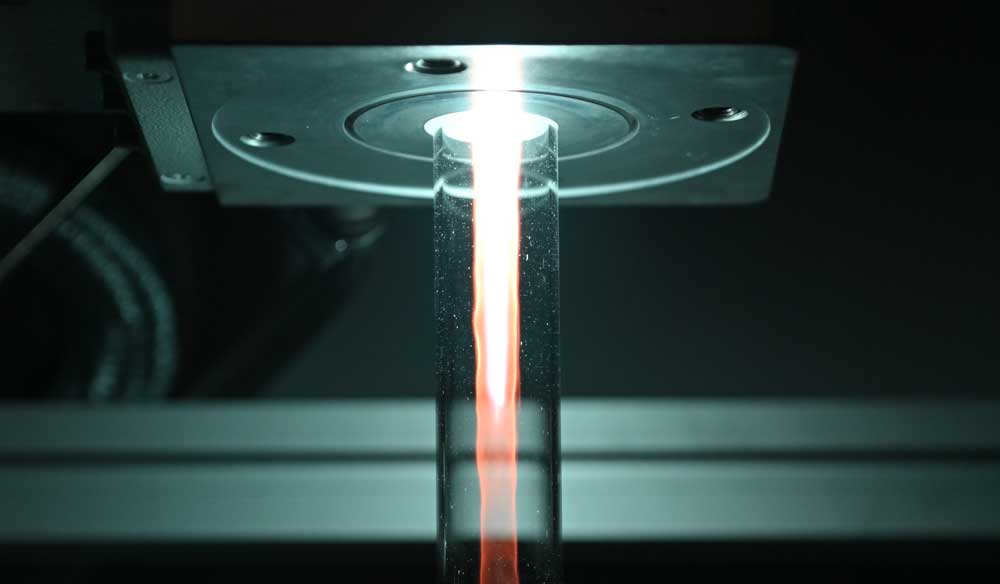



A3,A7 - Plasma ChemistryGas Conversion in an sDBDSurface Dielectric barrier discharges are perfect |
SFB 1316 Sommer-meeting
Sommer-Meeting wird als Online-Meeting abgehalten
Das diesjährige Sommertreffen des SFB 1316 wird am 30. Juni und 1. Juli als Online-Meeting via Zoom abgehalten. Im Mittelpunkt des Treffens steht unter anderem die Vorbereitung der zweiten Förderphase. Die Forscher werden ihre Projektfortschritte und Ideen für die Weiterführung des Projekts vorstellen.
Die endgültige Agenda steht nun fest. Sollten sich noch Änderungen ergeben, wird die aktualisierte Agenda hier veröffentlicht.
- Den Zeitplan und die geplanten Vorträge für das Sommer-Meeting finden Sie in der Agenda.
JSPS Core-to-core program
Patrick Hermanns visit research group in Osaka
I have visited Hamaguchi Laboratories at Osaka University in Japan for 3 months. The lab exchange was funded partially by the CRC-1316 and the JSPS Core-to-core program. The group of Prof. Satoshi Hamaguchi developed a reaction-diffusion-convection simulation for the generation and transport of chemical species in water, introduced by atmospheric-pressure plasma.
During my stay I worked on a multiphase fluid model. The typical flow field of a turbulent atmospheric-pressure plasma jet in direct vicinity of a liquid was modelled by solving a k-epsilon turbulence model. A Volume-of-Fluid (VOF) method was applied for the coupled flow of gaseous and liquid phase. The simulations agree very well with experimental results in the literature. The results from the fluid flow simulations were integrated into the reaction-diffusion-convection equations to evaluate the influence of different flow regimes on the generation and transport of chemical species in the liquid.
In Bochum University, I am working as a PhD-Student within project “B5: 2D-plasma-liquid-solid interfaces – plasma electrolytic oxidation“. The results generated can be useful for this project in regards of chemical species generation inside of liquids. In addition, the fluid flow model is interesting for other groups working with atmospheric-pressure plasmas (e.g. B2: “Self-organization of sub-µm surface structures stimulated by microplasma generated reactive species and short-pulsed laser irradiation“). Summarizing I can say, that I had a very pleasant stay in Osaka, that I personally enjoyed a lot. The cooperation with Hamaguchi Laboratories were very fruitful and everyone was very kind during my stay.
JSPS Core-to-core program
Abdulkadir Yayci visits Japanese colleagues
From October to December 2019, I was able to join the lab of Prof. Satoshi Hamaguchi at the Center for Atomic and Molecular Technologies in Osaka, Japan. My field of research is applied microbiology and my focus is on biocatalytic reactions with non-thermal plasmas. Using numerical simulations, I studied the propagation of plasma-induced reactive species in liquids to gain an insight on the depth of penetration and concentration of these species. This knowledge will help to understand the interaction between plasmas and enzymes that are studied in project B8 of the CRC 1316, specifically to protect the enzymes from inactivation and to drive biocatalysis. The research stay in Japan was very helpful to depen my knowledge for my main research question.
Project Area AB Meeting
Project meeting is now held online
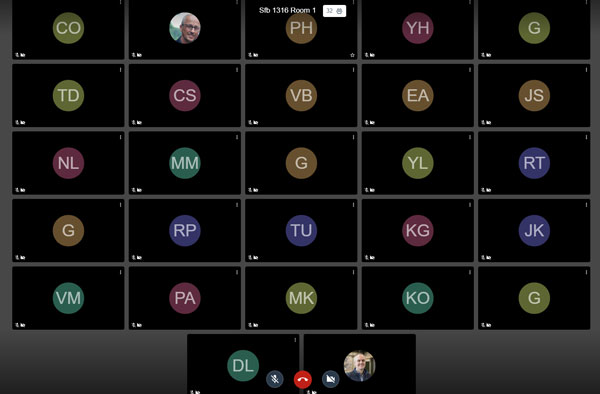 As the current COVID-19 situation has changed the everyday worklife, also the SFB's meeting routine is being adapted. The next Project Area Meeting for both project areas A and B had been planned to be an on-site meeting in Berlin is now changed into a virtual meeting on April 1st and 2nd.
To allow a smooth meeting, the system has been tested during this week and best practice rules for virtual meetings have been set up. This should allow all projects to present and discuss their recent work despite working from home. As virtual meeting are often found to be more exhausting than on-site meetings and harder to focus on over long periods of time, the presentation time has been changes to 15 minutes with an additional 5 minute discussion.
- The time schedule and planned presentations for both days can be found in the agenda.