
A3,A7 - Plasma ChemistryGas Conversion in an sDBDSurface Dielectric barrier discharges are perfect |
Exchange
Visit of Katharina Laake and Pia-Victoria Pottkämper at IPP in Prague
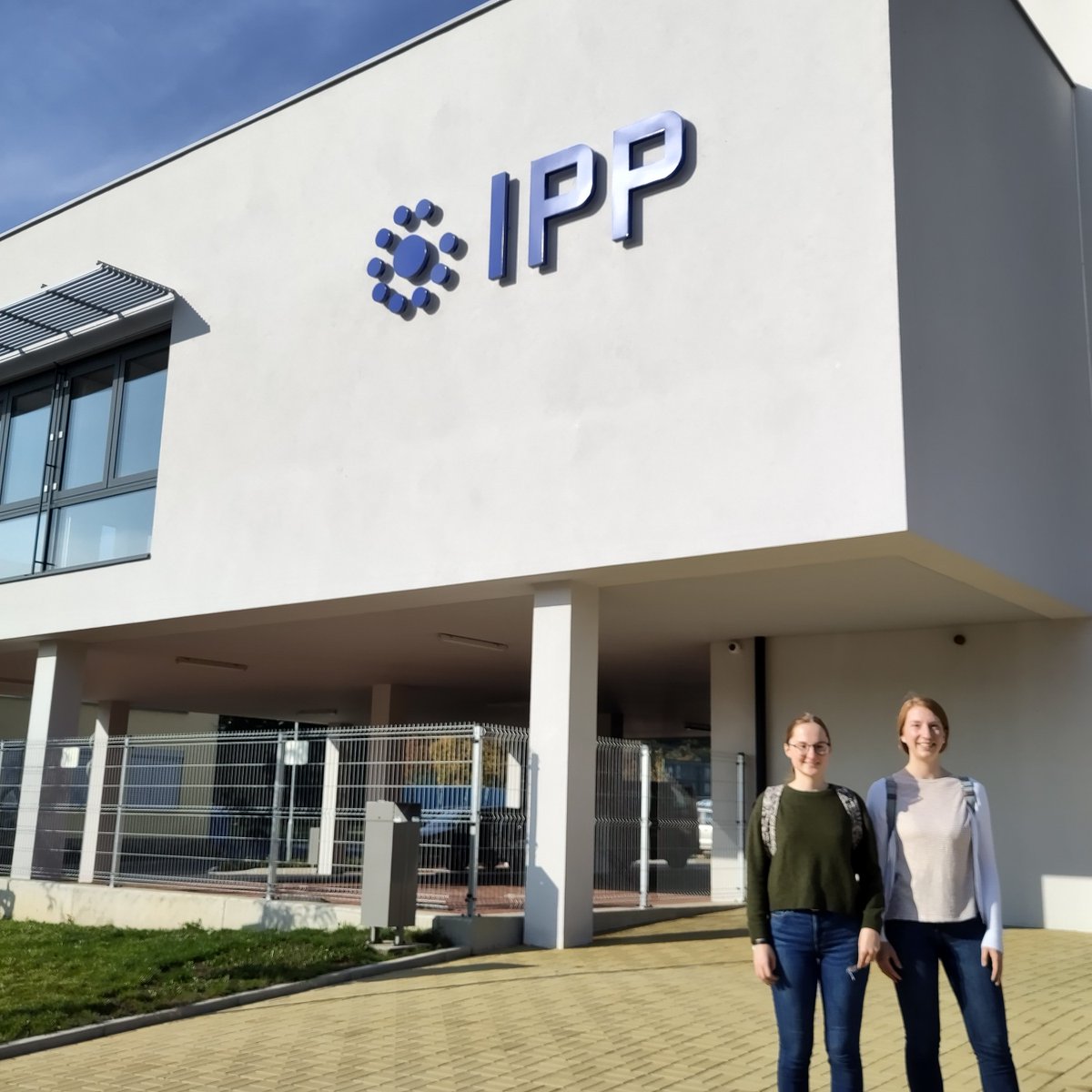
Pia Pottkämper and Katharina Laake from project B7 (SFB 1316) visited the Institute of Plasma Physics of the Czech Academy of Sciences from October 17th-19th. After the previous stay of Petr Bílek from October 12th-13th, they were invited to visit their labs and discuss about recent research of nanosecond pulsed plasmas in liquids. According to that topic, Katharina Laake gave a talk dealing with the “Temporal evolution of nanosecond pulsed plasmas in water” during their stay.
Internationalization
GEC conference 2022 in Japan
After two years of social distancing and online meetings, 2022 will be known as the year that gave rebirth to on-site conferences. Since the beginning of the year, many conferences have returned, and so has the GEC (gaseous electronics conference). From Monday (Oct 3rd) to Friday (Oct 7th), the international low-temperature plasma community met in Sendai, Japan. As the organizers would not get tired of emphasizing, they were hyped about finally realizing an in-person event again. The community shared this enthusiasm.
Almost six hundred papers were presented to five-hundred-fifty participants- the third most papers within the last ten years- and an attendance comparable to online events. Another notable statistic of the conference is the high count of students. Half of the participants were students, which included Ph.D. students as well as undergrads. With thirty-three contributions, a large group from Bochum and the SFBs attended GEC. Similar to the conference, this group had a dominant share of Ph.D. and undergrad students.
At least four parallel sessions were conducted to fit the numerous contributions into the five days available. Scientific highlights of the conference were the workshops conducted on Monday and the price talks; given on Wednesday. Professor Toshiaki Makabe received the "Will Allis Prize'' to acknowledge his life's work in plasma science, and Professor Masaru Hori received the "Reactive Plasma Award'' for his research. In terms of success, the SFBs, SFB-TR87 and CRC1316, did not fall too short in comparison. Andrew Gibson, Lars Schücke and Jan Trieschmann (former two CRC 1316, latter SFB-TR87) were invited to present their research. Julian Schulze (PI in both CRCs) chaired and organized the GEC, and five people from the consortia were chosen as session chairs.
Moreover, two outstanding performances have to be mentioned. The respective committees priced the oral presentation of Tobias Gergs and the poster presentation of Arisa Bodnar. Tobias Gergs is a member of the SFb-TR87 and got awarded the "Student's Excellence Award". Arisa Bodnar presented her Bachelor thesis, which she did in the frame of the CRC 1316, and received the "Student Poster Price". All in all, the large share of people and their valuable contributions caused the SFBs to impact the conference meaningfully.

The wholesome and successful experience is reflected in the happy faces in the picture above.
MGK
CRC 1316 members joining the International Plasma School
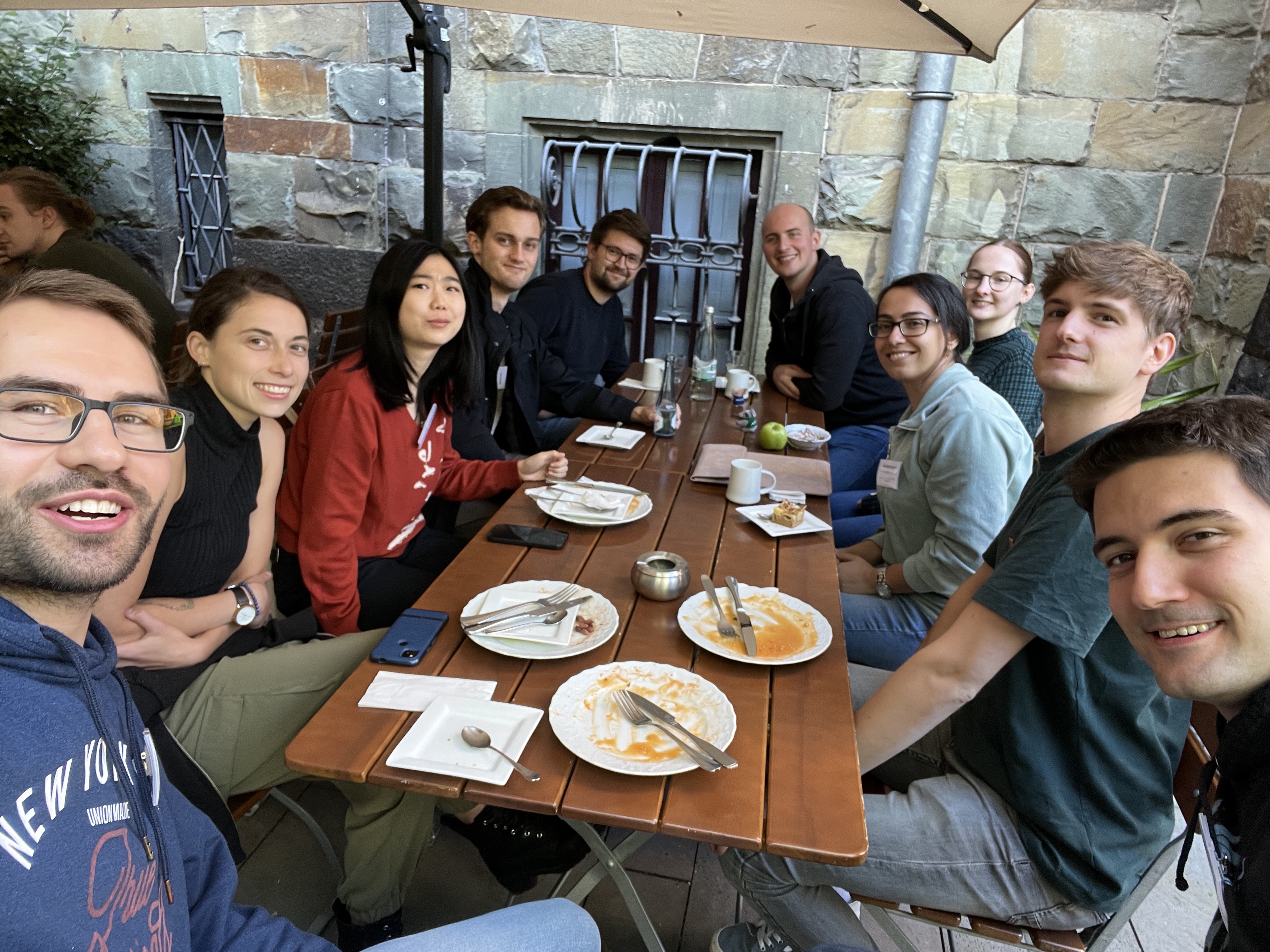
A large group of ten people from the SFB 1316 consortium participated in the 25th International School on Low-Temperature Plasma Physics. To deepen their knowledge of plasma science and technology, the PhD students from Bochum and Ulm attended the plasma school for one week. In addition to lectures, the school's program also included workshops and poster sessions.
MGK
Große Beteiligung des CRC1316 an der Internationalen Plasmaschule
Die 25. Ausgabe der International Plasma School on Low-Temperature Plasmas fand vom 1. bis 5. Oktober im Physikzentrum in Bad Honnef statt. Anschließend wurde die zweitägige Master Class zum Thema elektrische Antriebe abgehalten. 76 Teilnehmer aus sechzehn Nationen nahmen an dieser jährlichen Veranstaltung teil. Die internationale Leitung der Plasma School lag in den Händen von Prof. Dr. Holger Kersten und Prof. Dr. Jan Benedikt von der CAU Kiel.
Das umfangreiche Programm bot den Studenten verschiedene Themen: von der Theorie bis zur angewandten Plasmatechnologie. Die Vorträge (23 aus acht Nationen) wurden von einem Rahmenprogramm begleitet, das eine intensive Diskussion mit den Dozenten ermöglichte. Jeden Abend gab es eine Frage- und Antwortrunde mit den Lehrern des Tages, bei der ein spannender Austausch stattfand. Hands-on-Workshops vermittelten zudem praktische Erfahrungen im Bereich der Spektroskopie.
Außerdem waren in diesem Jahr zahlreiche Doktoranden des SFB 1316 und der begleitenden Projekte an der Veranstaltung beteiligt.