
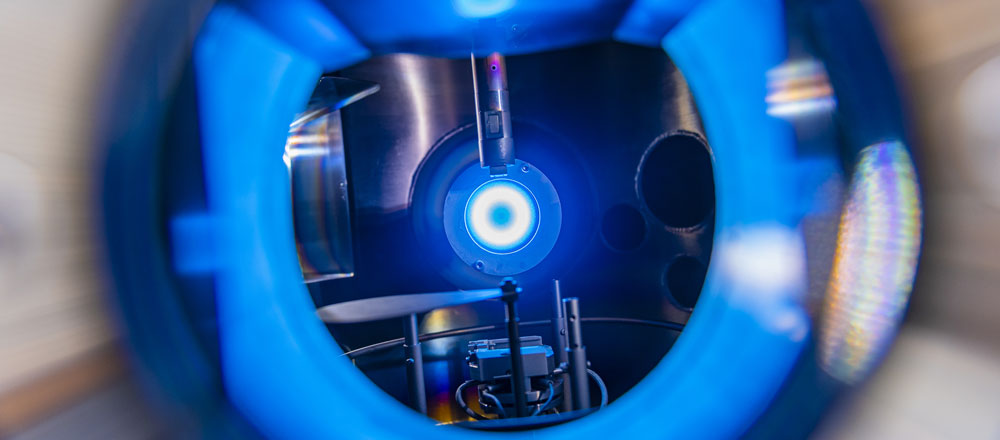
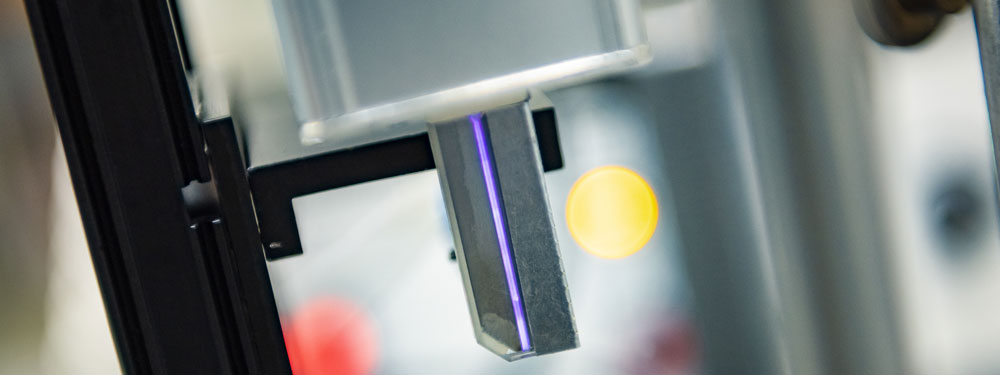
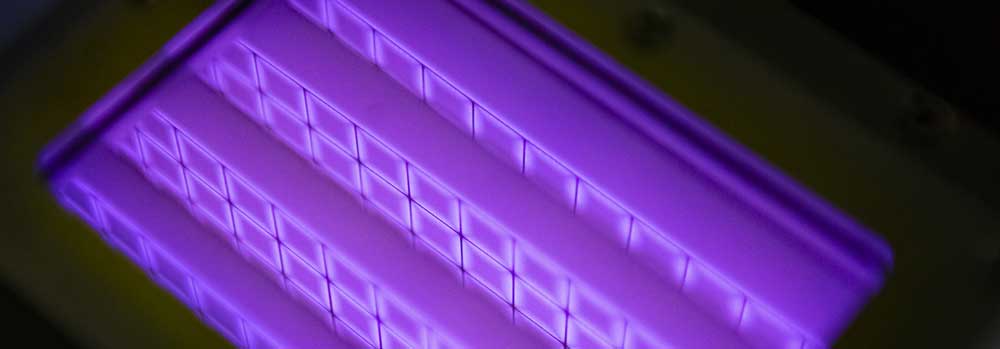
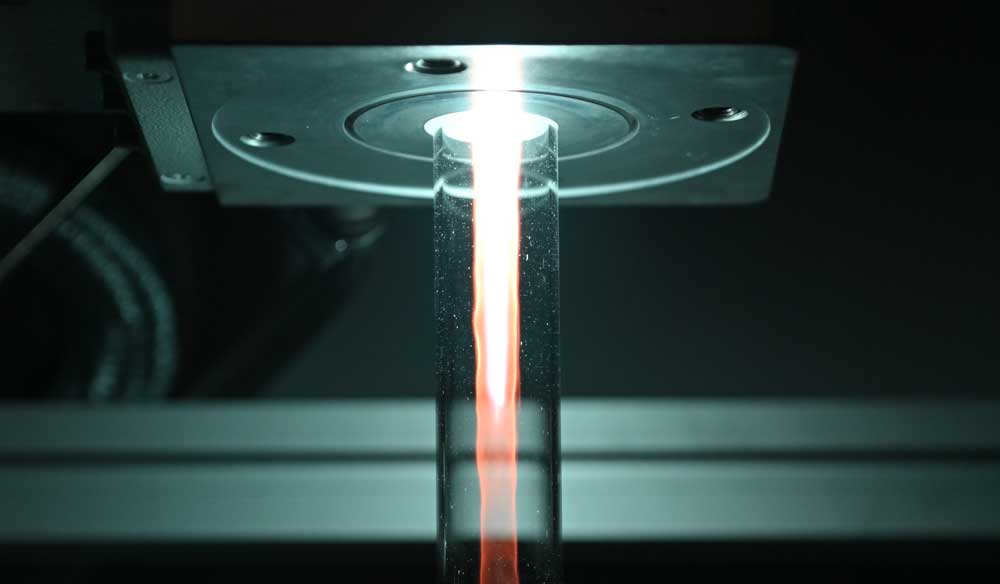
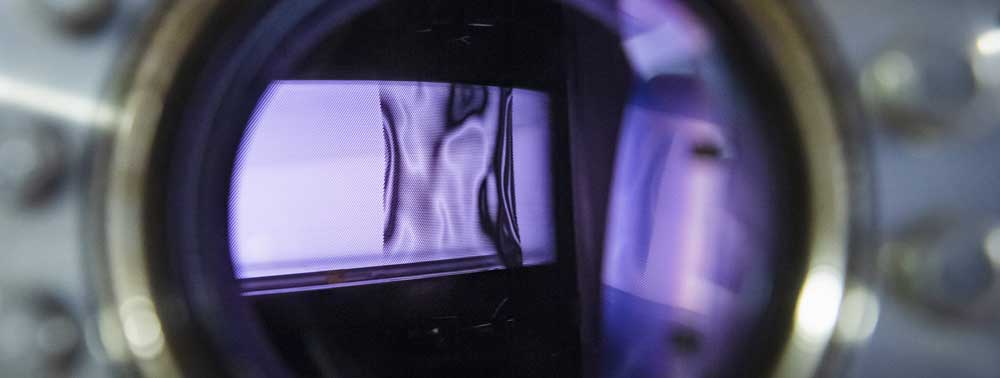

A3,A5 - Plasma simulationIon Wind from a sDBDThe ion wind from an sDBD has been calculated by |
Mikhail Sneider at EP5
 During May 4–5, the CRC 1316 had the pleasure of welcoming Prof. Mikhail N. Shneider from Princeton University, USA, as a guest visitor. During his stay, he visited several CRC laboratories and received guided tours at EP2, EP5, and AEPT.
A highlight of the visit was his seminar talk:
“Combined Laser-Microwave Diagnostics of Gas and Weakly Ionized Plasma”
The seminar attracted researchers and students interested in advanced plasma diagnostics and provided valuable insights into current developments in the field. The visit offered an excellent opportunity for scientific exchange and discussions within the CRC 1316 community.
Dr. Ibrahim Sadiek Appointed Subcommittee Chair for CLEO 2027
Dr. Ibrahim Sadiek has been appointed Subcommittee Chair for Science & Innovation 13 (S&I 13): Active Optical Sensing within the CLEO conference series, one of the leading international conferences in laser science and photonics, following his service as a subcommittee member in 2026.
S&I 13 covers a wide range of topics in active optical sensing, including spectral, acoustic, and navigational sensing, as well as laser-based diagnostics of plasmas, combustion, and extreme environments. It also includes UV, visible, infrared chemical sensing, and integrated sensing approaches.
As Subcommittee Chair, Dr. Sadiek will lead the selection of committee members, coordinate the identification of invited speakers, and oversee the abstract review process. He will also contribute to shaping the technical program of CLEO 2027.
CLEO 2027 will take place from May 2 - 7, 2027, in Long Beach, California, USA.
Link to CLEO webpage: https://cleoconference.org
Plasma Science for Teachers
In the 48. Lüscherseminar, organized by TU München, Achim von Keudell gave a lecture on 'Cold Plasmas a key enabling technology of the 21st century' on 18.4.2026 in Zwiesel, Bavaria - Programme.
Materialdownload*
Der Plasma-Truck wird mit einem sogenannten Forschungsbuch begleitet, dass sich der teilnehmende Kurs laden kann und so die Experimente begleitet werden. Es ist ausgelegt, dass die SuS dieses auf dem ipad laden und die einzelnen Stationen bearbeiten. Zu jeder Station gibt es eine Einleitung mit Anknüpfungen an den Unterricht. Darauf aufbauend sind dann die Experimente an den Plasmaröhren gedacht. Das Materialheft für die SuS für den Plasmatruck kann hier* geladen werden.
Ein Video* gibt vor der Unterrichtseinheit eine Einführung in Plasmen allgemein:
Weiteres Material (Videos der einzelnen Plasmaröhren) kann gebündelt hier* geladen werden.
*Das Material ist passwortgeschützt und kann man auf Nachfrage bekommen per E-Mail-Anfrage an sfb1316(at)rub.de