


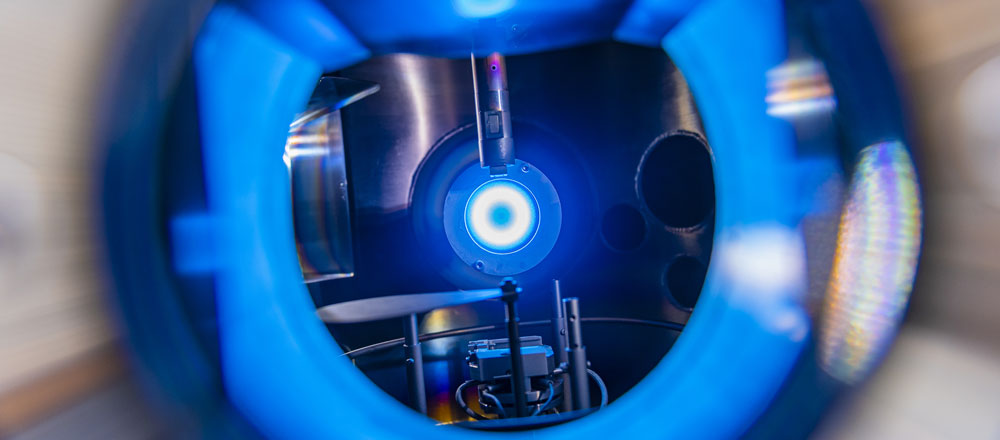
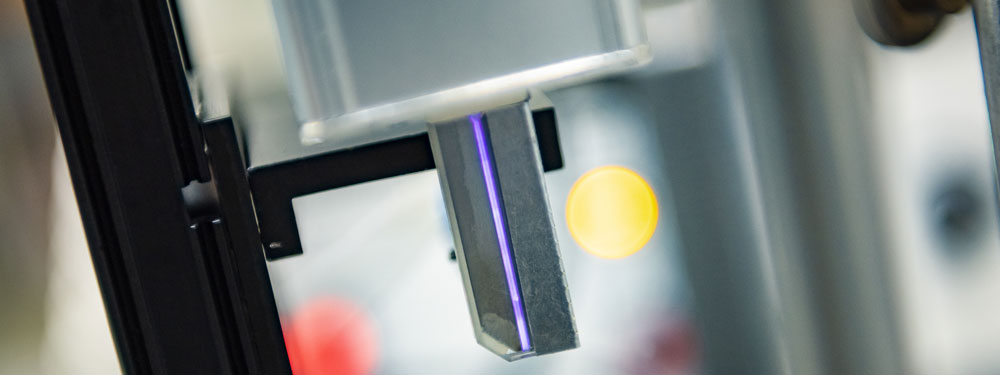
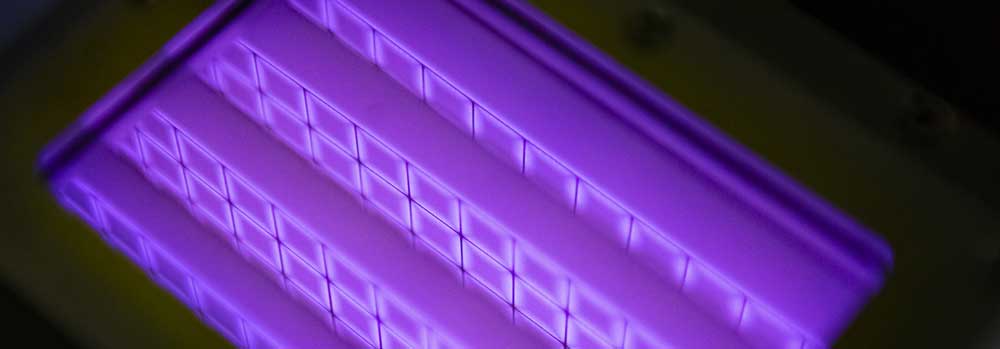
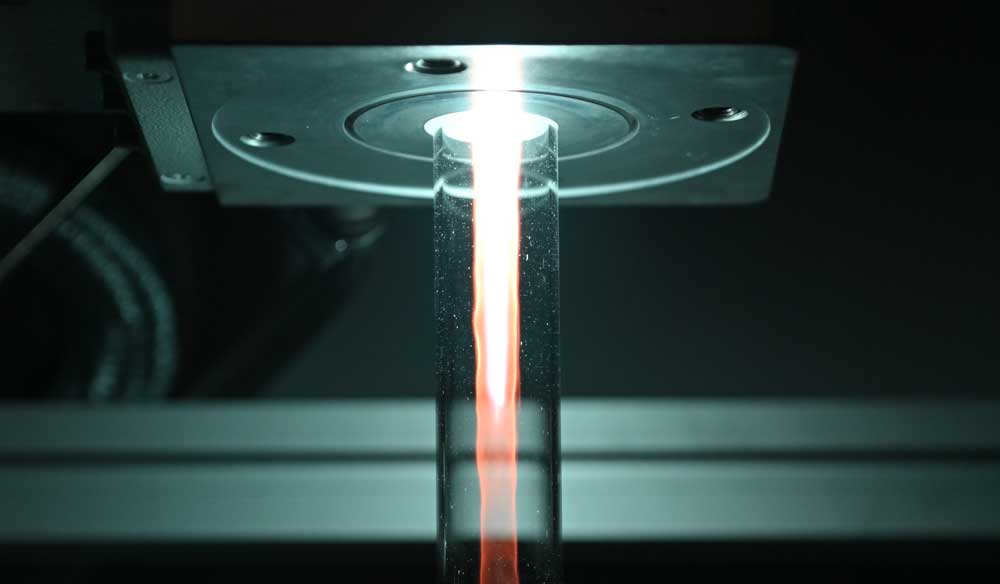


A3,A7 - Plasma ChemistryGas Conversion in an sDBDSurface Dielectric barrier discharges are perfect |
Excursion to Greifswald 2026
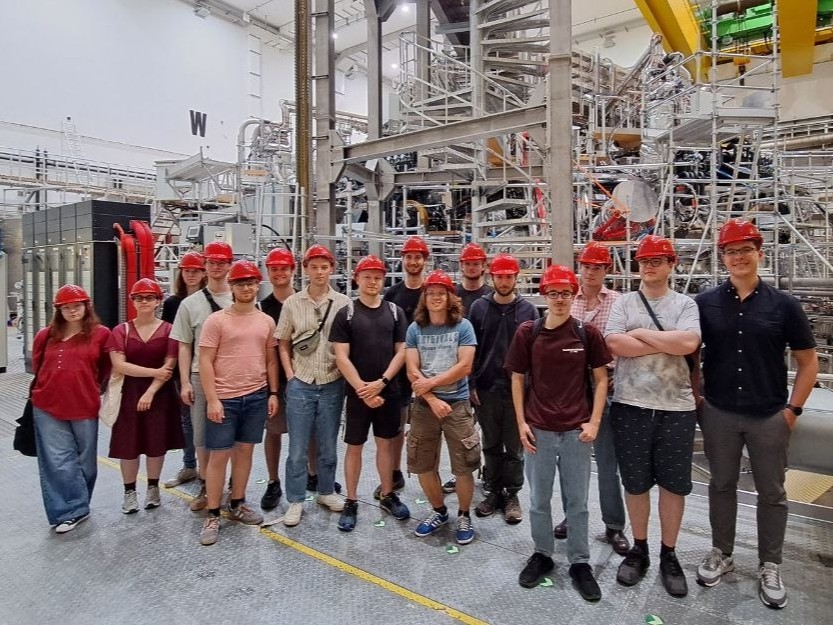
From August 12 to August 14, this year’s excursion took place in Greifswald at the Leibniz Institute for Plasma Science and Technology (INP) and the Max Planck Institute for Plasma Physics. During lab tours at the INP, the participating students were able to see firsthand how research in plasma physics is conducted: both practically through experiments and theoretically through modeling. Another major topic was the management of scientific data to ensure its long-term storage and reuse. In direct contrast to many smaller experiments conducted by individual researchers in their own labs, the IPP focuses on research within a large-scale project involving hundreds of scientists working simultaneously: research on the world’s largest fusion reactor of its kind, the Wendelstein 7-X. During the tour of the reactor hall and the control room, as well as through lectures, participants were able to experience the scale that research in plasma physics can reach. In addition to all the educational events, there was plenty of opportunity for networking among students with varying levels of experience: more spontaneous activities, such as watching the solar eclipse and the Perseid meteor shower together on the Baltic Sea beach, provided many opportunities for relaxed socializing.
CRC 1316 at IWM 13 in Busan, South Korea
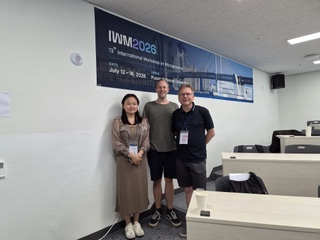 Three researchers from CRC 1316 participated in the "13th International Workshop on Microstructures (IWM 13)“, held from July 12-16 in Busan, South Korea, where they presented their latest research and exchanged ideas with leading scientists from around the world.
All three researchers contributed to the scientific program with oral presentations. Their talks covered a broad range of topics, including plasma electrolytic oxidation (Lars Schücke), catalytic conversion of n-butane (Yue Cheng), and micro-plasma arrays for gas conversion (Marc Böke).
A particular highlight of the conference was the invited talk given by Marc Böke. Participation in IWM 13 provided an excellent opportunity to strengthen international collaborations, discuss recent advances in microplasma and microstructure research, and showcase the diverse research activities of CRC 1316.
The CRC 1316 at the ICPM11 in Japan
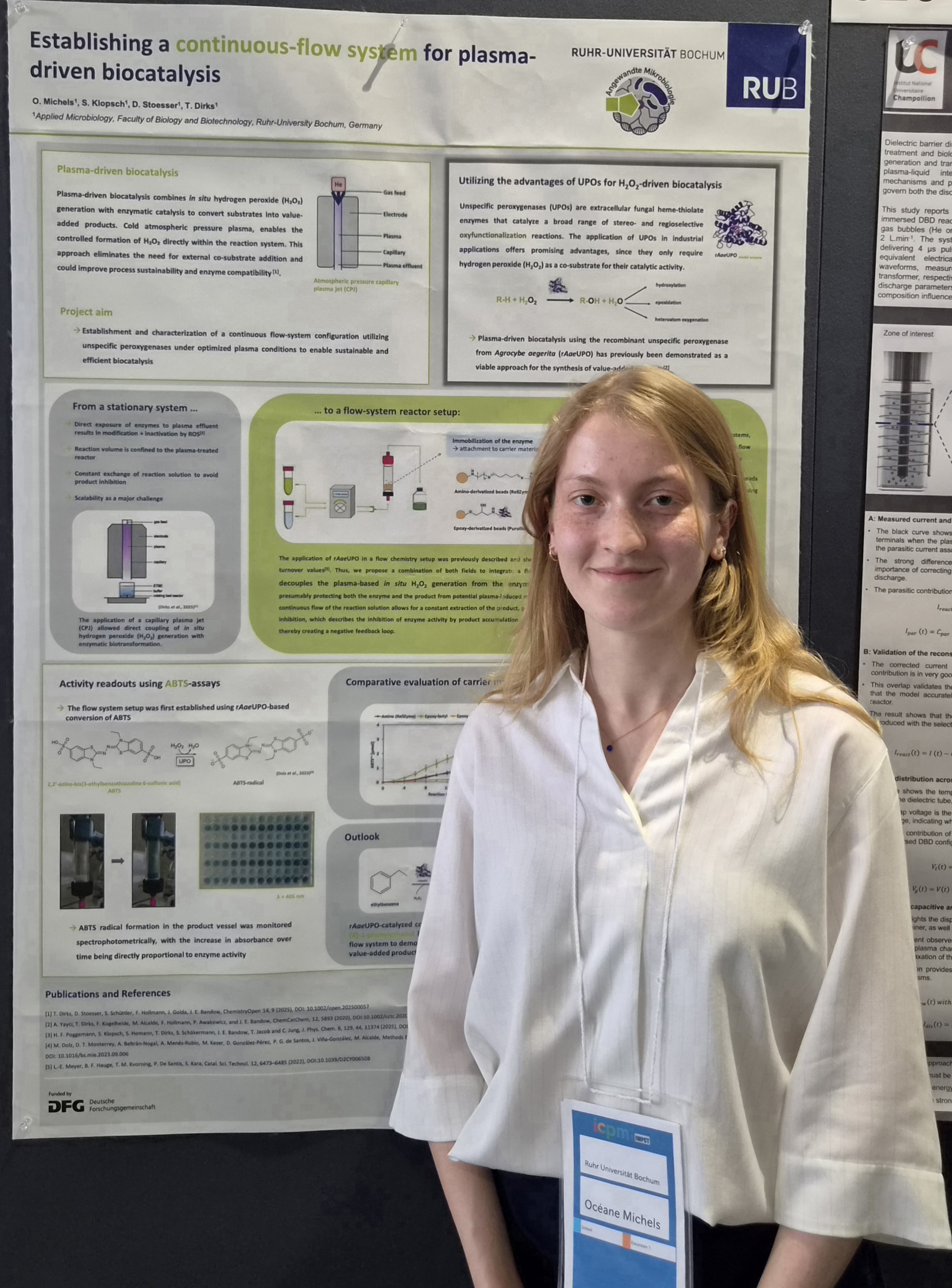
From the 31st may to the 5th of June the ICPM11 (11th International Conference on Plasma Medicine) and IWPCT10 (10th International Workshop on Plasma for Cancer Treatment) took place in Gifu, Japan. The CRC 1316 had been, amongst others, greatly represented by Ms. Océane Michels, who showed her work in a poster-session as well as presenting the first results of her Master-Thesis project.
5th Workshop on FAIR data in plasma science
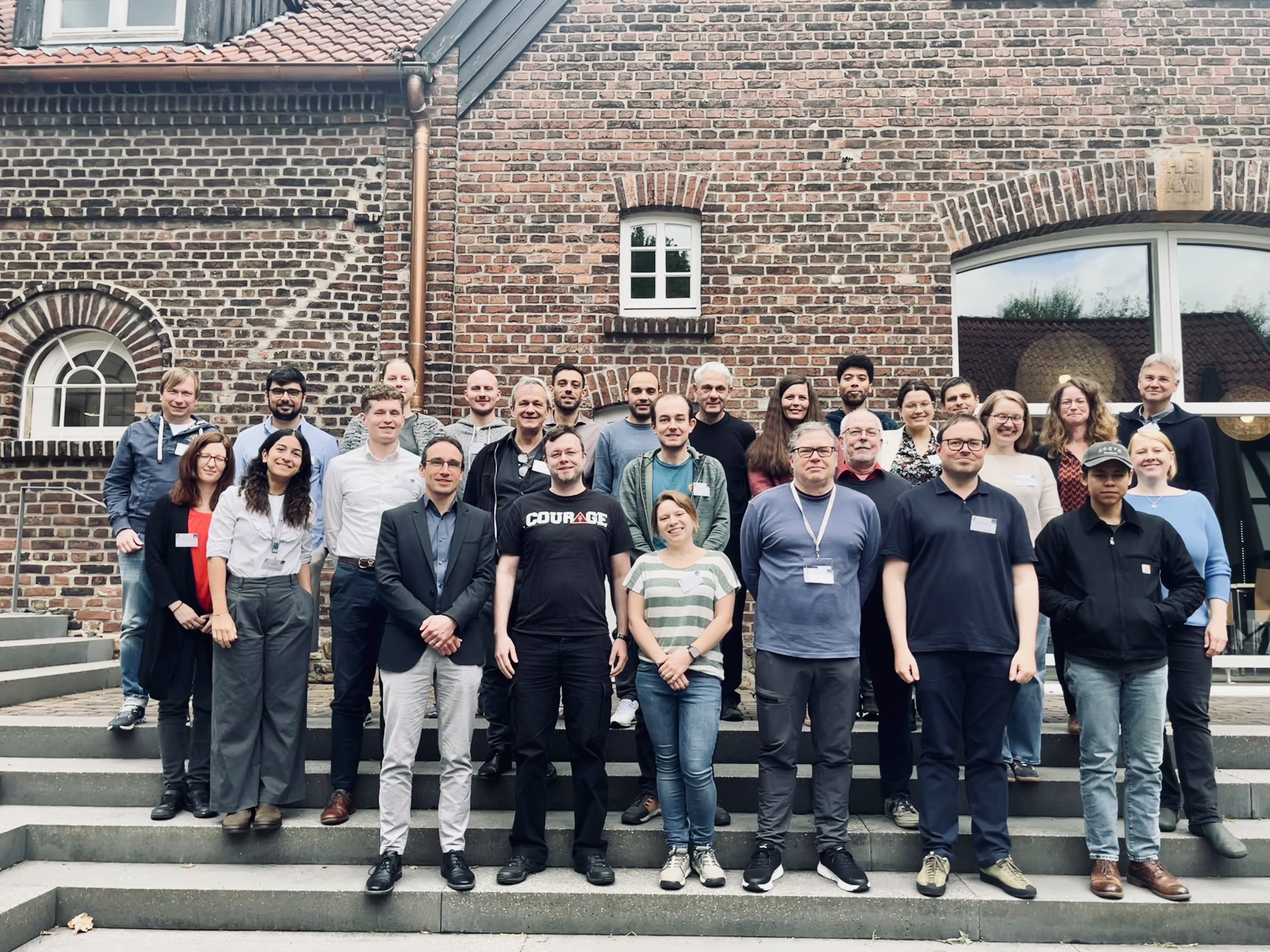 On May 11–12, scientists from plasma science and related research fields met at Beckmanns Hof at Ruhr University Bochum for the 5th Workshop on FAIR Data in Plasma Science. The workshop was organized by Kiel University, Leibniz Institute for Plasma Science and Technology Greifswald, and Ruhr University Bochum.
The workshop fostered a highly interactive atmosphere, with participants enthusiastically engaging in discussions on FAIR data practices and their implementation across different disciplines. A particular highlight of the event were the interactive sessions, in which hands-on activities and practical examples demonstrated how FAIR data principles can be integrated into everyday laboratory work.